Homeowners insurance is designed to protect against major losses, but it does not cover every type of damage. Exclusions, deductibles, and policy limits can all affect what an insurer pays after a storm. Understanding those details before severe weather arrives can help prevent costly surprises when it is time to file a claim.
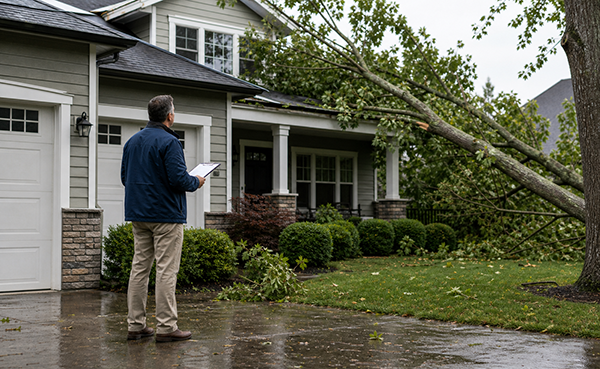
Most policies cover sudden damage caused by wind, hail, fire, or falling trees. Even then, the cause matters. Two problems that look nearly identical may be handled differently depending on how the damage occurred and whether it developed gradually.
Understand the Water Distinction
Standard homeowners insurance may cover rain that enters after wind damages a roof or breaks a window. Water that rises from the ground, overflows a river or creek, or accumulates as surface water is generally considered flooding and is typically excluded. This can happen even outside designated flood zones when heavy rain overwhelms drainage systems. Separate flood insurance is available through the National Flood Insurance Program and private carriers, though coverage often includes a waiting period.
Know What Requires Added Coverage
Sewer backups and sump pump failures are frequently excluded unless additional coverage has been added. Slow leaks, long-term moisture, mold, and deterioration caused by deferred maintenance may also fall outside a standard policy. Ask your agent how these losses are handled and whether water backup coverage is appropriate for your home.
Review How the Roof Is Insured
Wind and hail damage is often covered, but the payout may depend on the roof's age and the terms of the policy. Older roofs may be insured at actual cash value, with depreciation deducted, while others may qualify for replacement-cost coverage. Keep records of installation, inspections, warranties, and repairs to help verify the roof's age and condition.
Update the Rebuilding Estimate
A home's market value is not the same as the cost to rebuild it. Sale prices reflect land, location, and buyer demand, while reconstruction costs are driven by labor, materials, permits, demolition, debris removal, and current building codes. Report additions, finished basements, remodeled kitchens, and upgraded finishes so the dwelling coverage limit reflects the home as it is today.
Make the Annual Review Count
Discuss flood insurance, water backup protection, wind and hail deductibles, roof coverage, detached structures, personal property limits, and temporary living expenses with your agent. Maintain a current home inventory with photos, videos, receipts, and serial numbers stored securely offsite or in the cloud.
A brief annual review can help confirm that your policy still matches your home, its condition, and the risks around it. The goal is not to prepare for every possible loss. It is to understand where your coverage stands before the next storm puts it to the test.